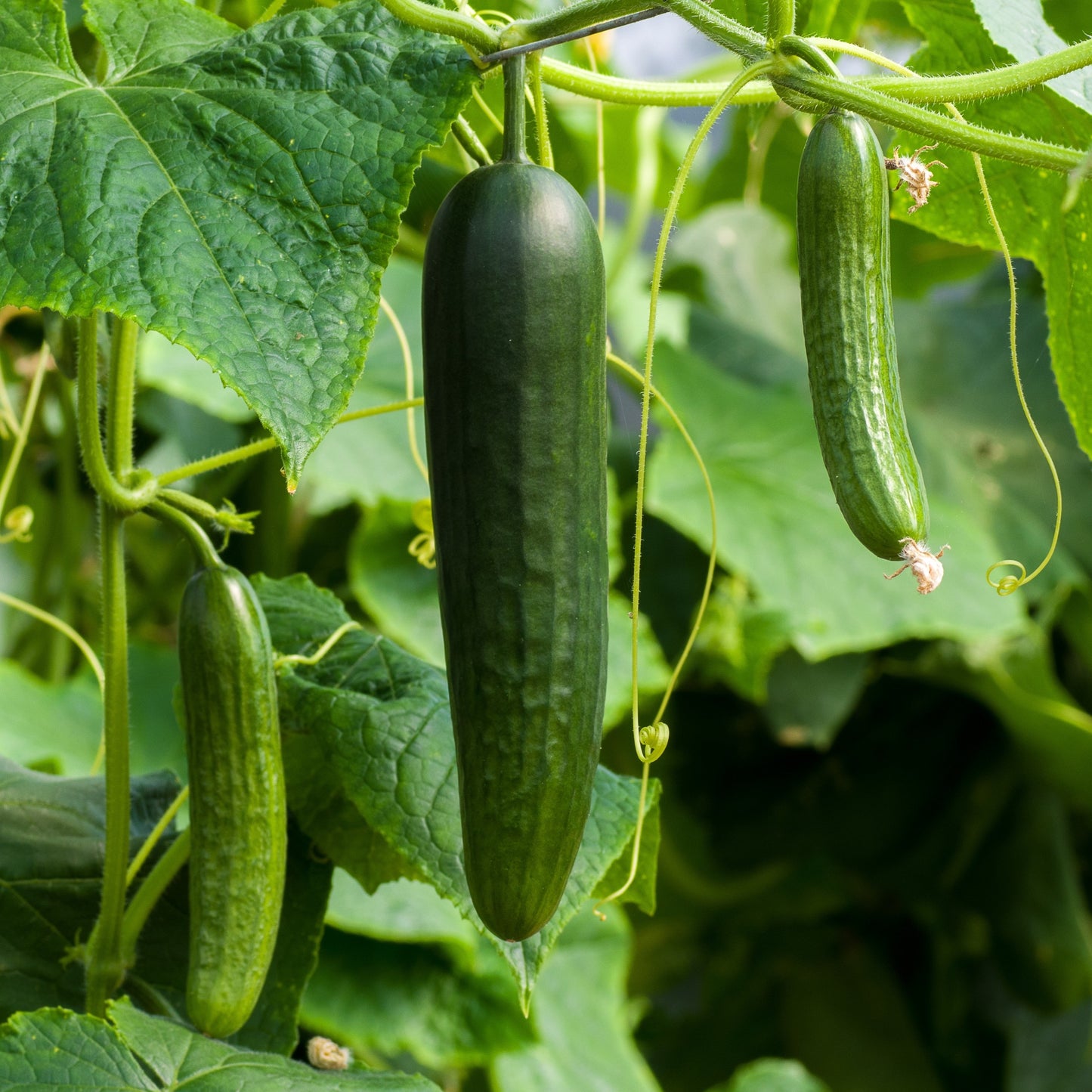
How to Grow Cucumber ‘Marketer’
‘Marketer’ is a classic open-pollinated slicing cucumber, producing smooth, dark green fruits with crisp, juicy flesh and small seeds. Vigorous vines bear heavily over a long season when given warmth, rich soil, and steady moisture. Ideal for fresh eating, salads, sandwiches, and light pickling, it performs beautifully in garden beds, raised beds, and on trellises.
Quick Growing Facts
| Botanical name | Cucumis sativus ‘Marketer’ |
| Plant type | Warm-season annual vine grown for fresh slicing cucumbers (salad type) |
| Days to germination | About 3–10 days in warm soil (70–95°F / 21–35°C), fastest around 80–90°F (27–32°C) |
| Days to harvest | Approx. 55–70 days from direct sowing, depending on climate and growing conditions |
| Height & spread (mature plants) | Vines typically 12–24 in (30–60 cm) high on the ground and 4–6+ ft (1.2–1.8+ m) long; taller if trained on a trellis |
| Fruit size | Usually 6–9 in (15–23 cm) long, smooth, dark green, slightly tapered, best picked medium-sized for flavor and texture |
| Light requirements | Full sun (6–8+ hours/day) for best yields; tolerates very light afternoon shade in hot climates |
| Soil | Loose, fertile, well-drained soil rich in organic matter; pH about 6.0–7.0; warm, moisture-retentive but not soggy |
| Spacing | On the ground: 12–18 in (30–45 cm) apart in rows 4–6 ft (1.2–1.8 m) apart. On a trellis: 9–12 in (23–30 cm) apart along the support. |
| Hardiness | Frost-tender warm-season crop; damaged by frost and prolonged cold; thrives in warm, settled weather |
When & Where to Grow ‘Marketer’ Cucumbers
Cucumbers love warmth and grow quickly once the soil and air are consistently warm. ‘Marketer’ performs best when seeds or transplants go into the garden after all danger of frost has passed and nights stay mild.
- Last frost rule: Sow or transplant outdoors only after your last expected frost and when soil has warmed to at least 65–70°F (18–21°C).
- Spring & summer: In most climates, cucumbers are grown as a late-spring to summer crop. In very hot regions, they may do best with early planting and some afternoon shade.
- Location: Choose a sunny, sheltered spot with good air circulation and fertile, well-drained soil.
- Containers: Grow in large containers or grow bags (minimum 5–7 gallons) with a sturdy trellis or cage for support.
Soil Preparation
Deep, loose, fertile soil helps cucumber roots spread and access water and nutrients. Good preparation encourages vigorous vines and heavy fruit set.
- Loosen the top 10–12 in (25–30 cm) of soil and remove weeds, roots, and stones.
- Mix in plenty of compost or well-rotted manure to improve fertility and moisture retention.
- In poorer soils, add a balanced organic vegetable fertilizer according to label directions.
- Ensure excellent drainage—cucumbers dislike waterlogged conditions but need steady moisture.
- In cool-spring climates, raised beds or black mulch can help warm the soil faster for earlier planting.
Direct Sowing ‘Marketer’ Cucumbers Outdoors
Direct sowing into warm soil is usually the easiest and most reliable way to grow cucumbers. They dislike root disturbance, so sowing where they will grow saves transplant stress.
- Timing: Sow once soil temperature is at least 65–70°F (18–21°C) and nights are consistently mild.
- Hill method (on the ground): Form small mounds or “hills” 3–4 ft (0.9–1.2 m) apart. Sow 4–6 seeds per hill, about 1/2–1 in (1.25–2.5 cm) deep.
- Row method: Sow seeds 6–8 in (15–20 cm) apart in rows. Thin later to final spacing.
- Trellis method: Place a trellis or fence in position and sow seeds 6–9 in (15–23 cm) apart along its base.
- Water: Water gently after sowing and keep the seed zone consistently moist (but not waterlogged) until seedlings emerge.
- Thinning: Once seedlings have 2–3 true leaves, thin to the strongest plants, leaving 2–3 plants per hill or 9–12 in (23–30 cm) between plants along a row/trellis.
Starting ‘Marketer’ Indoors (Optional)
In short-season or cool-spring areas, starting cucumbers indoors can give a head start, but transplant carefully to avoid disturbing roots.
- Sow 2–3 seeds per cell or small pot 3–4 weeks before your last frost date, about 1/2 in (1.25 cm) deep.
- Use biodegradable pots if possible so you can plant them directly without removing the root ball.
- Keep at 70–80°F (21–27°C) with bright light; thin to one strong seedling per pot after germination.
- Harden off seedlings for 5–7 days before transplanting outdoors.
- Transplant after frost when soil is warm, taking care not to disturb roots; plant at the same depth as in pots.
Training & Support
‘Marketer’ can sprawl over the ground or be trained up supports. Trellising saves space, improves airflow, and keeps fruits cleaner and straighter.
- Provide a sturdy trellis, fence, A-frame, or netting 4–6 ft (1.2–1.8 m) tall.
- As vines grow, gently guide and loosely tie them to the support using soft ties if needed.
- On the ground, consider straw or leaf mulch beneath vines to keep fruit off wet soil and reduce rot.
Watering & Feeding
Cucumbers are thirsty, fast-growing plants that need steady moisture and regular feeding to produce crisp, juicy fruit over a long season.
- Watering: Aim for about 1–1.5 in (2.5–4 cm) of water per week, more in hot or sandy conditions. Water deeply at the base, avoiding wetting foliage late in the day.
- Mulch: Apply compost, straw, or other organic mulch to conserve moisture, suppress weeds, and keep fruit clean.
- Feeding: Side-dress with compost or a balanced organic fertilizer a few weeks after planting, then again when vines begin to flower and set fruit. Liquid feeds (compost tea, fish emulsion) every 2–3 weeks can boost production, especially in containers or poor soils.
- Avoid stress: Irregular watering and nutrient swings can cause bitterness, misshapen fruits, and reduced yields.
Flowers, Pollination & Fruit Set
‘Marketer’ cucumbers bear separate male and female flowers on the same plant. Bees and other insects must transfer pollen for good fruit set.
- Male flowers typically appear first; female flowers have a tiny baby cucumber (swollen ovary) behind the petals.
- Plenty of bees and pollinators are essential for straight, well-filled cucumbers.
- If pollination is poor, fruits may be misshapen or drop. Avoid broad-spectrum insecticides and consider planting pollinator-friendly flowers nearby.
Pests & Diseases
Cucumbers can face several common garden pests and fungal diseases, especially in warm, humid, or crowded conditions. Good airflow, crop rotation, and regular monitoring help keep ‘Marketer’ productive.
- Cucumber beetles: Yellow-and-black beetles that chew leaves and transmit bacterial wilt. Use row covers early, hand-pick, and rotate crops.
- Aphids: Cluster on new growth and undersides of leaves. Spray with a firm jet of water or use insecticidal soap.
- Squash bugs & leafhoppers (in some regions): Check undersides of leaves for egg clusters and remove them; encourage beneficial insects.
- Powdery mildew: White, powdery coating on leaves, usually late in the season. Improve airflow, avoid overhead watering late in the day, and remove badly affected leaves.
- Downy mildew & other leaf spots: Yellow or brown patches on leaves. Grow in full sun, ensure good air circulation, and avoid overhead irrigation when possible.
- Root issues: Avoid waterlogged soil and do not plant cucumbers in the same spot year after year; rotate with non-cucurbit crops.
Harvesting ‘Marketer’ Cucumbers
Frequent harvesting keeps vines productive and ensures tender, mild-flavored fruits. ‘Marketer’ is best picked when fruits are medium-sized, smooth, and still bright green.
- Harvest when cucumbers are about 6–9 in (15–23 cm) long, firm, and evenly colored dark green.
- Do not let fruits become oversized and seedy; this slows further production.
- Use a sharp knife or pruners to cut fruits from the vine, leaving a short stem attached. Avoid pulling, which can damage vines.
- Pick every 1–2 days during peak production to encourage continual flowering and fruiting.
Storing & Using ‘Marketer’ Cucumbers
- Handle gently to avoid bruising the skin.
- Store unwashed cucumbers in the refrigerator in a breathable or lightly sealed bag; use within about 5–10 days for best quality.
- For maximum crispness, avoid storing near ethylene-producing fruits like apples or tomatoes.
- Enjoy fresh in salads, sandwiches, dips, and infused water, or use for quick refrigerator pickles and light pickling.
Saving Seed from Cucumbers
‘Marketer’ is an open-pollinated variety, so you can save seed if proper isolation is maintained. Cucumbers are insect-pollinated and can cross with other cucumber varieties, so grow only one variety for seed or separate by distance and barriers.
- Choose healthy, true-to-type plants and allow several fruits to mature fully on the vine until they turn yellowish and soften.
- Harvest mature fruits, cut them open, and scoop out seeds and pulp into a container.
- Ferment seeds in a little water for a day or two, stirring daily, to help separate good seeds from pulp (similar to tomato seed saving).
- Rinse thoroughly, spread seeds in a thin layer on a non-stick surface, and dry completely in a warm, shaded, well-ventilated place.
- Store dry seeds in a labeled, airtight container in a cool, dark, dry place. Under good conditions, cucumber seeds remain viable for several years.
Tips for Success
- Wait for warm soil before sowing—cold soil is the number one cause of poor germination and stunted seedlings.
- Use trellises where possible to save space, improve airflow, and produce straighter, cleaner fruits.
- Water consistently and mulch generously to maintain even soil moisture and prevent bitterness.
- Harvest early and often; don’t let fruits over-mature on the vine if you want maximum production.
- Rotate cucurbits (cucumbers, squash, melons) to a new bed each year to reduce pest and disease buildup.
Note: Growing conditions and timing vary by region. Adjust sowing dates, watering, and heat or frost protection to match your local climate and weather patterns.